Where a Modest Salary Still Buys a Front Porch: A Buyer's Guide to America's Small Industrial Legacy Towns
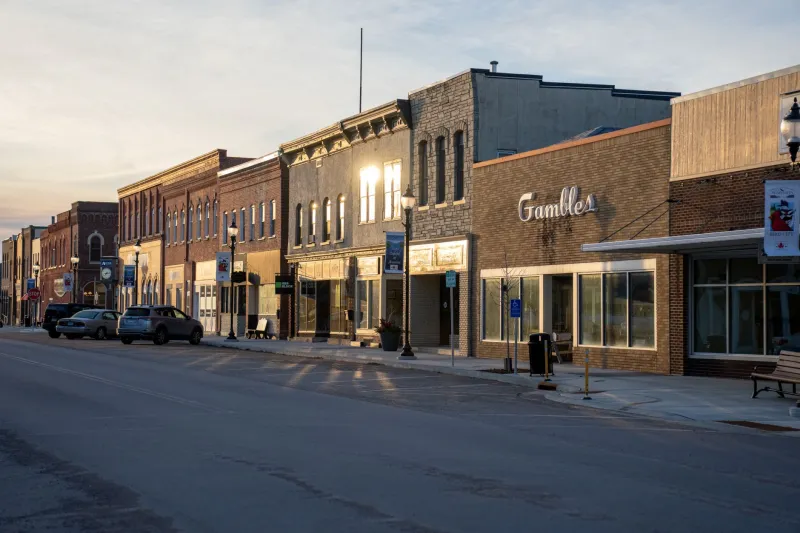
In much of coastal America, the phrase "entry-level home" now describes a two-bedroom condominium with a six-figure down payment. But drive two hours west or north of nearly any major metro — past the interstate exits and into the old mill and manufacturing corridors of Ohio, Pennsylvania, upstate New York, and Michigan — and you will find something that looks, at first glance, like a statistical error: three-bedroom houses with garages and yards listed for the price of a new SUV.
These are the legacy towns of American industry. And for households priced out of the major metros, they represent one of the last genuine pathways to homeownership on a moderate income. They also represent a real set of risks that deserve an honest accounting.
The Economics of the Under-$100,000 House
The price collapse in these communities is not random; it is arithmetic. When a dominant employer — a steel mill, a textile plant, an auto parts factory — closes or automates, the local wage base erodes. Demand for housing falls faster than the housing stock does, because these towns were built with a surplus of worker homes: compact two-stories, company bungalows, and modest capes constructed in dense walkable grids during the first half of the twentieth century.
The result is a persistent gap between what these houses cost and what it costs to build or buy anything comparable in a supply-constrained metro. In communities across the Rust Belt, the median sale price of a single-family home remains below the national median down payment.
For a household earning the area median income — roughly $60,000 to $75,000 in many of these counties — a fully amortizing mortgage on a $90,000 house can cost less per month than a one-bedroom apartment rents for in Denver, Austin, or Boston.
Who Is Actually Moving In
The buyers arriving in these towns are more varied than the stereotype suggests. Census and postal data point to several distinct groups:
- Remote and hybrid workers priced out of metro housing, for whom a two-hour proximity to a major airport or an occasional office visit is a fair trade for a mortgage under $800 a month.
- First-time buyers from nearby metros, often commuting an hour or more in exchange for ownership rather than perpetual renting.
- Retirees and near-retirees cashing out equity in expensive markets and buying homes outright, sometimes without a mortgage at all.
- Returning residents, adults who grew up in these towns, left for opportunity, and are now bringing remote salaries or small businesses back home.
The all-cash retiree purchase deserves particular attention from an affordability standpoint. When a buyer can pay cash for a home, they are not adding to household cost burdens — they are converting an inflated asset in one market into a modest, fully-owned home in another. It is one of the few mechanisms by which the current housing market actually transfers wealth toward, rather than away from, ordinary households.
What Is Being Rebuilt
The most encouraging developments in these towns are not headline-grabbing megaprojects but patient, incremental work. Main Street façade programs funded through state historic tax credits. Community development financial institutions (CDFIs) rehabbing vacant houses into owner-occupied homes with soft-second mortgages. Land banks — now operating in hundreds of municipalities — clearing tax-delinquent titles and moving abandoned parcels back into productive use.
Several states have also built targeted programs for exactly this geography. Ohio's Housing Development Loan programs, Pennsylvania's whole-home repair initiatives, and New York's revitalization grants all channel public capital into housing stock that private lenders often won't touch. For buyers, these programs can mean matched down payment assistance, low-interest rehab loans, or property tax abatements on renovated homes.
The Honest Caveats
A publication devoted to affordable homeownership owes its readers the full picture, and the full picture includes real risks.
The job base is thin. Remote income solves the problem for one household at a time, but it does not rebuild a local economy. Buyers should verify that their income source is stable and location-independent before purchasing, and should not assume they can find comparable local employment if that income disappears.
Resale value is not guaranteed. A house bought for $85,000 may still be worth $85,000 in fifteen years. In towns with flat or declining populations, homeownership functions less as an investment vehicle and more as a consumption good — cheaper than renting, but without the equity appreciation metro buyers have come to expect. Buyers who treat the purchase as a home first and an asset second tend to be the most satisfied.
Infrastructure carries deferred costs. A century-old water system, an aging sewer lateral, or a roof that is twenty years into a thirty-year life can turn a bargain purchase into a financial strain. Independent inspections — including sewer scopes and structural evaluations — are non-negotiable, and buyers should budget repair reserves accordingly.
Insurance and lending can be complicated. Some national lenders are reluctant to write mortgages in small markets or on homes below certain condition thresholds. FHA 203(k) rehabilitation loans and local bank portfolio lenders often fill the gap, but buyers should arrange financing before falling in love with a property.
A Checklist Before You Leap
For households considering the move, we recommend a disciplined process:
- Spend a full week in the town across different times of day, in different weather if possible.
- Verify broadband capacity — not just availability — if remote work is the income plan.
- Pull five years of county sales data to understand realistic resale timelines.
- Meet the county land bank or redevelopment authority; they often know which blocks are stabilizing and which are not.
- Confirm hospital and urgent care access, particularly for families and older buyers.
- Get a full independent inspection, including sewer and foundation.
Ownership as a Community Act
There is a final consideration that goes beyond the balance sheet. When a moderate-income family buys and occupies a long-vacant house on a struggling block, the effect compounds — for the neighbors, the school enrollment figures, the tax rolls, and the town's self-image. Homeownership in these places is not merely a personal financial decision; it is a participation in civic recovery.
The houses are there. The question is whether buyers approach them with clear eyes about the risks and a genuine commitment to the place. For those who do, the $100,000 house remains one of the most underappreciated opportunities in American housing today.